Starting an NGO is one of the most powerful ways to create change in your community. But before you can do that work, you have to make it official. NGO registration in Nepal is the legal process that gives your organization the right to operate, accept funds, and build partnerships. Without it, your NGO has no legal standing, no matter how good your intentions are.
Many people feel confused or overwhelmed when they start looking into how to register an NGO in Nepal. The process involves multiple offices, several documents, and a set of legal rules that are not always easy to understand. That is exactly why this guide exists.
Eurasian Law’s comprehensive guide details each step of NGO registration in Nepal, from the governing laws to the necessary documents, associated costs, and post-registration requirements. Whether you’re a student, community leader, or social entrepreneur, you’ll find this guide straightforward and beneficial.
What Is an NGO in Nepal?
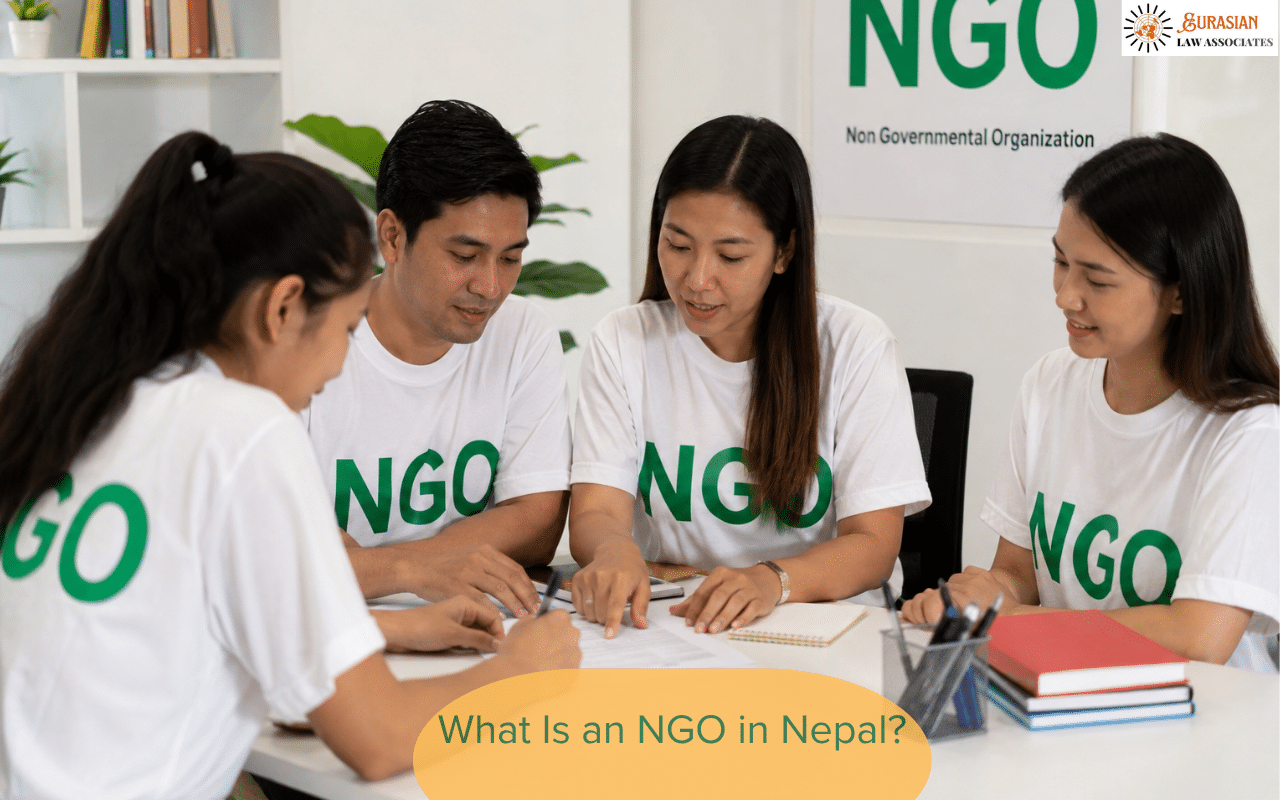
An NGO, or non-governmental organization, is an independent and non-profit group formed by people who want to help society. NGOs in Nepal work on social, environmental, and community issues. They support areas like education, health, women’s rights, disaster relief, environmental protection, and poverty reduction.
NGOs are not run by the government. They are started and managed by ordinary citizens. They do not distribute profits to their members. Instead, any income or funding goes back into the organization’s work.
In Nepal, non-governmental organization registration is necessary to make your group legally recognized. A registered NGO can:
- Open a bank account in the organization’s name
- Apply for grants and funding from donors
- Partner with government bodies and international organizations
- Hire staff and sign legal contracts
- Work transparently within Nepal’s legal framework
Without completing NGO registration in Nepal, your group cannot do any of these things officially.
Governing Laws for NGO Registration in Nepal
Before you begin the registration process, it is important to understand which laws apply. NGO legal requirements in Nepal come from two primary acts and two key government bodies.
The governing laws for NGOs include the Association Registration Act 2034 and the Social Welfare Act 2049. These laws for NGOs in Nepal explain who can register, how NGOs operate, and what legal requirements must be followed. NGO registration in Nepal is governed by the Association Registration Act and gives an organization legal status after approval.
Association Registration Act 2034
The Association Registration Act 2034 (1977) is the main law that governs NGO registration in Nepal. This act explains who can register an NGO, what documents are needed, and what rules an NGO must follow after registration.
Under this act, any group of seven or more Nepali citizens can come together and register an NGO. The act also describes the powers of the District Administration Office (DAO) to approve or reject applications, and to monitor NGOs after they are registered.
The NGO registration act in Nepal makes it clear that all registered organizations must operate in line with their stated goals. They must also submit regular reports and audits to remain in good standing.
Social Welfare Act 2049
The Social Welfare Act 2049 (1992) is the second major law related to NGO registration in Nepal. This act created the Social Welfare Council (SWC), which is the national-level body that oversees NGO activities across the country.
The Association Registration Act Nepal and the Social Welfare Act Nepal work together. While the DAO handles initial registration, the SWC handles coordination, monitoring, and affiliation, especially for NGOs that want to receive funding from foreign donors.
Under the Social Welfare Act of Nepal, all NGOs that receive international donations must register with and report to the Social Welfare Council. This ensures that foreign funds are used properly and in line with Nepal’s national development goals.
Role of District Administration Office (DAO)
The District Administration Office, commonly known as DAO, is the main registration authority for NGO registration in Nepal. The DAO Nepal falls under the Ministry of Home Affairs and operates in every district of the country.
When you want to register an NGO in Nepal, one of the first important steps is submitting your application to the DAO in the district where your organization will operate. The DAO reviews your documents, checks the background of members, and provides the official registration certificate after approval.
The district administration office DAO Nepal also plays an important role after registration. It is responsible for renewing NGO registrations, handling complaints related to NGOs, and monitoring whether NGOs are working according to their stated objectives.
Role of Social Welfare Council Nepal
The Social Welfare Council Nepal (SWC) is a government body based in Harihar Bhawan, Lalitpur. It was established under the Social Welfare Act to coordinate and monitor NGO activities at the national level.
After you complete your DAO registration, the next major step is to apply for SWC affiliation. The Social Welfare Council Nepal is especially important for NGOs that plan to:
- Work with international NGOs (INGOs)
- Receive foreign grants or donations
- Implement large-scale national programs
The SWC also provides training, small grants, and partnership opportunities to affiliated NGOs. This makes SWC affiliation a valuable step, not just a legal one.
Who Can Register an NGO in Nepal?
Before starting NGO registration in Nepal, it is important to understand who is legally eligible to apply. Nepalese law sets specific requirements regarding membership, citizenship, and the basic conditions needed to register an NGO.
Minimum Number of Members
One of the most common questions people ask is about the minimum number of members for NGO registration in Nepal. According to the Association Registration Act 2034, you need at least seven founding members to register an NGO in Nepal.
These seven members must:
- All are Nepali citizens
- Be at least 18 years of age
- Have a clean criminal record (no serious criminal charges)
- Be willing to sign the founding documents and the Constitution
These seven members form the founding executive committee of the NGO. They are responsible for making the initial decisions, including preparing the constitution and choosing the name of the organization.
Basic Eligibility Requirements
Besides the number of members, there are other important eligibility requirements for NGO registration in Nepal:
- Non-profit purpose: Your organization must have social welfare goals, not commercial or profit-making ones. This is a core requirement under the NGO registration act in Nepal.
- Unique name: The name you choose must not already be taken by another registered organization.
- Office address: You must have a verifiable office address in Nepal. A rental agreement is usually required as proof.
- Common constitution: All founding members must agree on a single written constitution (Bidhan) that outlines the organization’s goals, structure, and operational rules.
Step-by-Step Process of NGO Registration in Nepal
The NGO registration process in Nepal involves four main stages. Each stage requires specific documents and involves a specific government office. Let us walk through each step clearly.
This updated process is designed to help organizations complete registration through the correct government offices. The step-by-step process includes local recommendations, DAO approval, tax registration, and SWC affiliation.
| Step | Government Office | Purpose |
| Step 1 | Ward Office | Office location recommendation |
| Step 2 | District Administration Office (DAO) | Official NGO registration |
| Step 3 | Inland Revenue Department (IRD) | PAN registration |
| Step 4 | Social Welfare Council (SWC) | Affiliation and recognition |
Step 1: Ward Recommendation Letter
The first step in the NGO registration process in Nepal is to visit your local Ward Office. The Ward Office is the smallest unit of local government in Nepal, and its recommendation letter is required to proceed with the rest of the process.
What happens at this step?
- You submit an application to the Ward Office explaining your NGO’s name, goals, and office location.
- The Ward Office verifies that your proposed office address actually exists in their area.
- They issue a recommendation letter confirming the office location and supporting your application.
This letter costs approximately NPR 2,000 in government fees, though this may vary depending on your local government. You will need this letter at every subsequent step, so make sure the information on it is accurate.
Step 2: Registration at the District Administration Office (DAO)
The second step is the most important one in the NGO registration process in Nepal. This is where you formally apply to register an NGO in Nepal by submitting your complete application to the DAO.
What the DAO does at this step:
- They review all your submitted documents carefully.
- They may ask for corrections or additional information if anything is missing.
- They conduct background verification of founding members through police reports.
- Once satisfied, they issue your official NGO registration certificate.
The DAO typically takes 7 to 21 working days to process applications, though delays can happen if documents are incomplete. The government fee at the DAO is approximately NPR 1,000, though this may vary by district.
After this step, your NGO is legally registered under the Association Registration Act 2034. You will have an official registration number, also called NGO darta number, which is your organization’s legal identity.
Step 3: PAN Registration for NGO
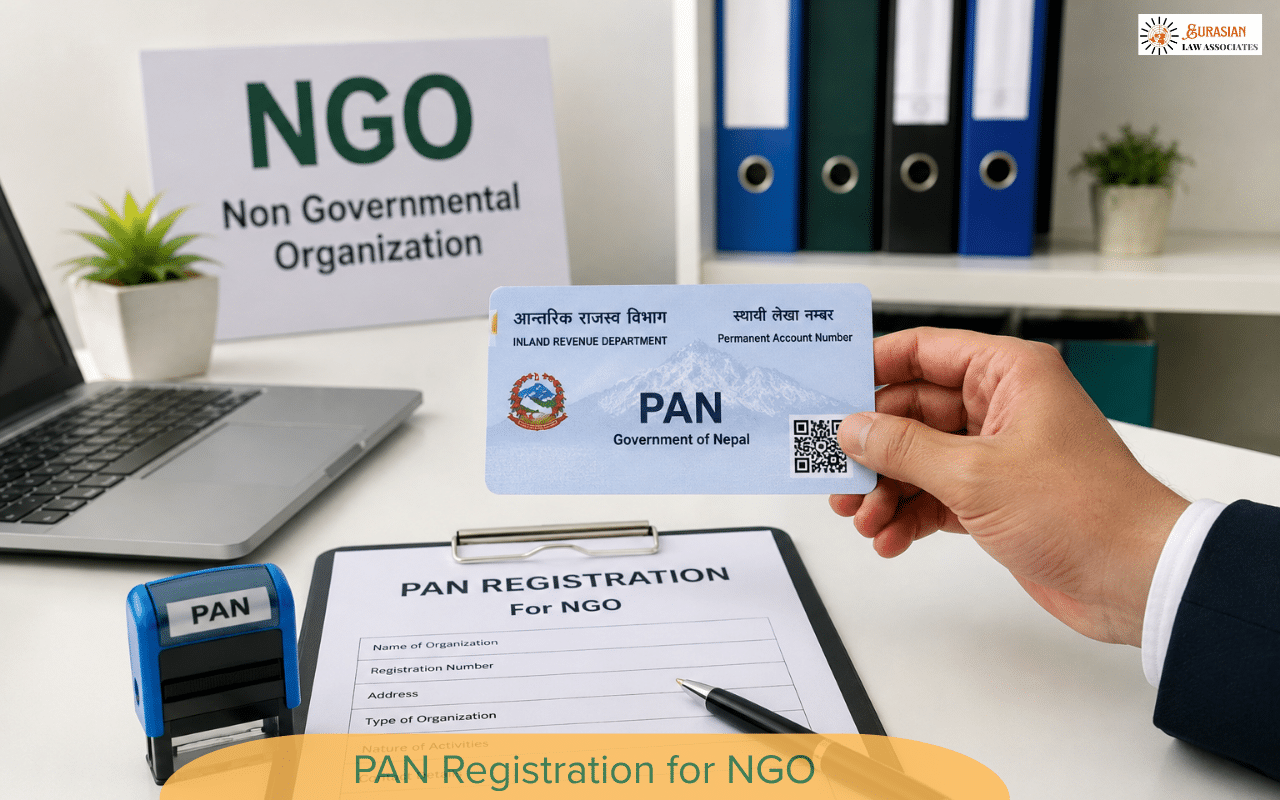
After receiving your registration certificate from the DAO, the next step is PAN registration of the NGO in Nepal. PAN stands for Permanent Account Number, and it is issued by the Inland Revenue Department (IRD).
PAN registration helps confirm the NGO’s legal identity and supports lawful financial operations. After approval, the NGO receives a certificate of registration and must also register with the Inland Revenue Department to obtain a PAN and continue lawful operations in Nepal.
Why is PAN registration important?
- It allows your NGO to open a formal bank account.
- It is required for filing tax returns and submitting annual financial reports.
- Most donors, government bodies, and banks will require your NGO’s PAN number before working with you.
To complete PAN registration, you need to visit the nearest Inland Revenue Department office with your DAO registration certificate, constitution, and identity documents of the executive members.
Step 4: Social Welfare Council Affiliation
The fourth step is to apply for affiliation with the Social Welfare Council of Nepal. This step is essential for NGOs that want full operational recognition at the national level.
What you submit to the SWC:
- Your DAO registration certificate
- Your NGO constitution
- An organizational profile explaining your work plans
- Details of all executive board members
- Proposed programs or work plans
The SWC affiliation fee is approximately NPR 3,000. Once approved, you receive your SWC affiliation certificate, which is required if you ever plan to receive funds from international donors or work in partnership with INGOs.
Documents Required for NGO Registration in Nepal
Getting your NGO registration documents in order before you visit the DAO will save you a lot of time and back-and-forth. Here is a clear list of what you need:
| Document | Purpose |
| Application Form | Official NGO registration application |
| NGO Constitution (Bidhan/विधान) | Defines rules and objectives |
| Citizenship Certificates | Identity proof of the founding members |
| Passport Photos | Member identification |
| Police Clearance Certificates | Background verification |
| Meeting Minutes | Proof of organizational decision |
| Ward Recommendation Letter | Local office verification |
| Office Proof | Confirms office location |
| Rent Receipt | Proof of office agreement |
All documents must be in Nepali and typed in the standard format accepted by the DAO. Documents in other languages must be accompanied by certified Nepali translations.
NGO Registration Cost and Time Required in Nepal
One of the most searched questions is about the cost of NGO registration in Nepal. Below is a transparent breakdown of the estimated government fees involved in the registration process:
| Stage | Government Fee |
| Ward Office Recommendation | Approx. NPR 2,000 |
| District Administration Office (DAO) Registration | Approx. NPR 1,000 |
| Social Welfare Council (SWC) Affiliation | Approx. NPR 3,000 |
| Total Government Fees | Approx. NPR 6,000 |
The approximate governmental fee for NGO registration in Nepal may vary depending on the district and local government procedures. While the fee for registration is NPR 6,000 in estimated government charges, additional costs may apply during the completion of the registration process.
Note: It is important to prepare all required documents before starting NGO registration in Nepal. Missing or incorrectly prepared documents may delay approval. Many organizations seek guidance from Eurasian Law Associates to help prepare documents and complete the registration process smoothly.
How long does NGO registration take in Nepal?
The standard timeline from submitting your application to receiving your DAO registration certificate is 7 to 21 working days, depending on your district and how complete your documents are. Including the time to gather documents and complete the SWC affiliation, the full NGO registration process in Nepal typically takes 1 to 2 months.
Post-Registration Compliance for NGOs in Nepal
Registering your NGO is just the beginning. After registration, you must maintain ongoing compliance to keep your organization legally active. Many NGOs face problems not because they failed to register, but because they ignored their post-registration responsibilities.
PAN and Tax Responsibilities
Once your NGO is registered and has a PAN number, it must comply with tax laws under the Inland Revenue Department. NGO compliance in Nepal in terms of tax includes:
- Filing annual income tax returns even if the organization had no taxable income.
- Deducting and depositing TDS (Tax Deducted at Source) when paying employees or service providers.
- Being subject to VAT in some operational activities.
NGOs are generally exempt from income tax on their core activities, but they must still file returns and follow reporting requirements.
Renewal and Annual Reporting
NGO registration renewal in Nepal is a key responsibility. After registration, your NGO must:
- Renew its DAO registration annually. This is called NGO Renewal Nepal. You must submit a renewal application along with the previous year’s activity report and financial statement.
- Renew your SWC affiliation every three years if you receive foreign funding. This requires submitting project proposals, progress reports, and audited financial statements.
Failure to renew on time can result in penalties or suspension of your registration. Staying on top of renewal dates is one of the most important parts of NGO compliance in Nepal.
NGO registration must be renewed annually to maintain active legal standing. If reporting and renewal rules are ignored, authorities may take action, including cancellation of registration in serious cases.
Audit and Regulatory Requirements
NGO audit requirements in Nepal are clearly defined under the Association Registration Act and the Social Welfare Act.
- Annual audit: Every registered NGO in Nepal must have its accounts audited by a licensed auditor each year.
- Submission to authorities: The audited financial statements must be submitted to the DAO and, where applicable, to the SWC.
- Board accountability: The NGO’s management committee is directly responsible for ensuring the accuracy of audit reports.
- Local government oversight: Local government bodies have the authority to review an NGO’s financial transactions if they have reason to investigate.
NGO reporting requirements in Nepal also include submitting annual activity reports describing which programs the organization ran and the outcomes it achieved.
Common Challenges During NGO Registration
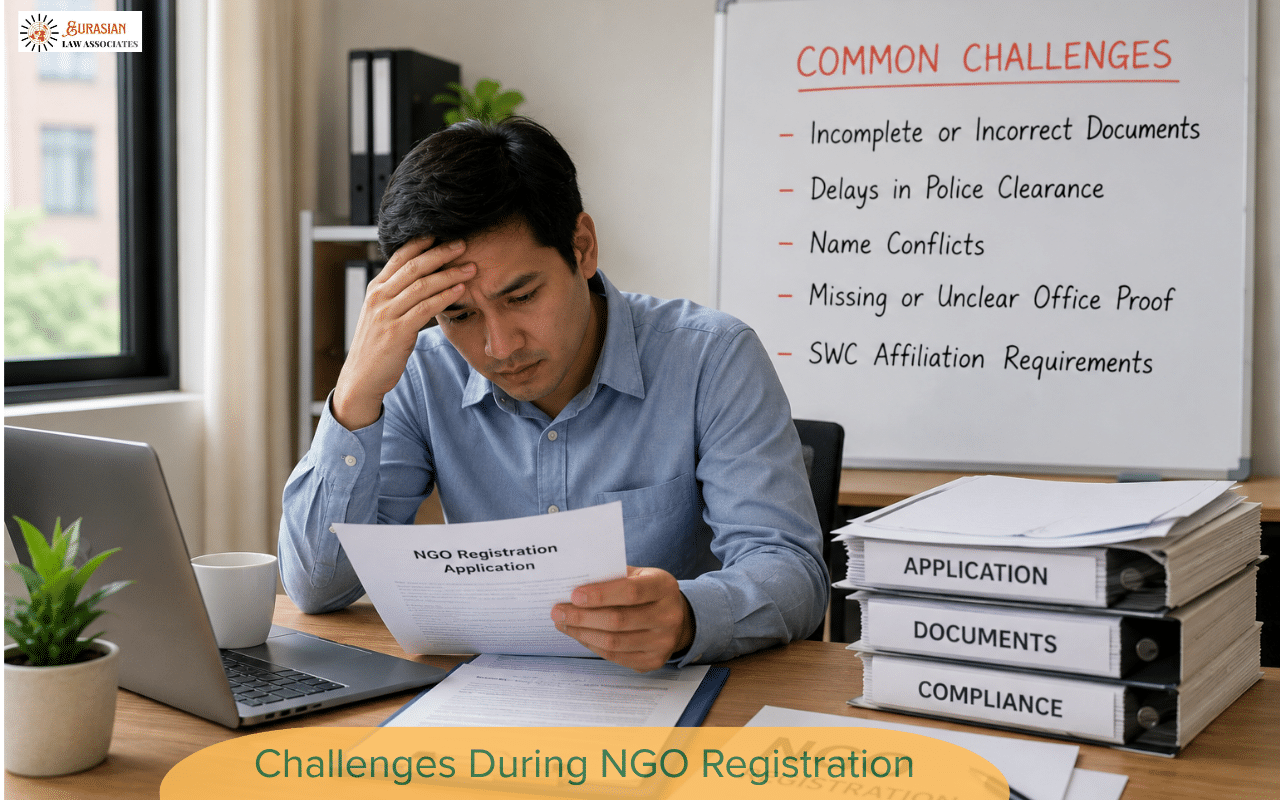
Understanding these challenges ahead of time will help you avoid delays during your NGO registration process in Nepal.
Incomplete or incorrectly formatted documents
The DAO is strict about document format. If your NGO constitution does not follow the standard structure, or if documents are missing or contain errors, your application will be returned for corrections. This is the single biggest cause of delays.
Delays in police clearance
Character reports from Nepal Police can take time to process, especially if members are from different districts. Always start collecting police clearances early in the process.
Name conflicts
If your chosen name is too similar to an already registered organization, the DAO will reject it. Research available names before settling on one.
Missing or unclear office proof
The Ward Office and the DAO both need to verify your office location. If your rental agreement is incomplete or unclear, it will delay your application.
SWC affiliation requirements
Many new NGOs are unaware that affiliation with the Social Welfare Council Nepal requires submitting a full organizational profile and work plan, not just a registration certificate. Preparing these documents properly takes time.
How Eurasian Law Helps with NGO Registration in Nepal
NGO registration in Nepal is manageable, but delays can happen when documents are incomplete or procedures are unclear. Professional legal guidance can help make the process smoother and more efficient.
Because the legal process of establishing an NGO can involve multiple offices and legal documents, many organizations seek legal advice from a lawyer in Nepal or a trusted law firm in Nepal to avoid delays and filing mistakes.
Eurasian Law Associates provides legal support for NGO registration in Nepal, including document preparation, DAO filing, PAN registration, SWC affiliation, and post-registration compliance. The firm also assists with NGO registration renewal in Nepal and ongoing legal requirements.
If you want to focus on your mission while avoiding paperwork and delays, Eurasian Law Associates is ready to assist. Contact us to begin your NGO registration process with confidence.
Conclusion
NGO registration in Nepal is an important step for any organization that wants to work legally and create long-term social impact. With proper documents, legal compliance, and timely approvals, the process can be completed smoothly and confidently.
If you need guidance with NGO registration, compliance, or renewal, Eurasian Law Associates is available to help you through each stage of the process.
Contact Eurasian Law Associates
Call: 9713592500
Email: eurasianlawassociates@gmail.com | info@laweurasian.com
Location: Kathmandu-32, Koteshwor, Kathmandu, Nepal
Frequently Asked Questions
Q: Where to Register an NGO in Nepal?
A: You can register an NGO in Nepal at the District Administration Office (DAO) of the district where your NGO will be based. The DAO is the main authority under the Association Registration Act 2034. After DAO registration, you must also apply for the Social Welfare Council Nepal affiliation. Many organizations also seek guidance from Eurasian Law Associates to help complete the process smoothly.
Q: Is Social Welfare Council Registration Mandatory?
A: SWC affiliation is not needed to get the first DAO registration certificate. However, it is very important for NGOs that want foreign funding, international donor support, or partnerships with INGOs.
Q: Can Foreigners Register an NGO in Nepal?
A: Foreigners cannot be founding members of a local NGO in Nepal. Under the Association Registration Act 2034, founding executive committee members must be Nepali citizens. Foreign organizations may register separately as INGOs through the Social Welfare Council.
Q: What Is NGO Darta (दर्ता) in Nepal?
A: NGO Darta (दर्ता) means the official registration of an NGO with the District Administration Office. “Darta” means “registration” in Nepali. NGO Darta is the first legal step in the NGO registration process in Nepal.
Q: How long does NGO registration take in Nepal?
A: The DAO usually processes NGO registration applications within 7 to 21 working days if documents are complete. Including preparation and SWC affiliation, the full process may take 1 to 2 months.
Q: What is the minimum number of members for NGO registration in Nepal?
A: NGO registration in Nepal requires at least seven founding members. All members must be Nepali citizens, at least 18 years old, and should have a clean criminal record.
Q: What is the total cost of NGO registration in Nepal?
A: Government fees are approximately NPR 6,000, including Ward Office, DAO, and SWC charges. Including legal help, notarization, and documents, the total cost of NGO registration in Nepal may range from NPR 20,000 to NPR 50,000.
Q: What is the NGO registration renewal process in Nepal?
A: NGO renewal Nepal requires an annual renewal application at the DAO with an activity report and an audited financial statement. NGOs receiving foreign funding through SWC affiliation must renew every three years.
Q: Do I need a PAN number for my NGO?
A: Yes. PAN registration of an NGO in Nepal is required after receiving the DAO registration certificate. The PAN number is needed for bank accounts and tax reporting.
Q: What are the NGO audit requirements in Nepal?
A: Every registered NGO must complete an annual audit by a licensed auditor. The audit report must be submitted to the DAO and, for SWC-affiliated NGOs with foreign funding, also to the SWC.
Q: Do I need legal help for NGO registration in Nepal?
A: Legal help is not mandatory for NGO registration in Nepal. However, many organizations seek legal guidance to prepare documents, meet compliance requirements, and avoid delays. Firms such as Eurasian Law Associates provide support throughout the registration process.
Q: What documents are required for NGO registration in Nepal?
A: NGO registration in Nepal requires an application form, NGO Constitution (Bidhan), citizenship certificates, and photos of founding members, police clearance certificates, meeting minutes, Ward recommendation letter, and office proof, such as a rental agreement. Since document errors often cause delays, many organizations seek legal guidance from Eurasian Law Associates to prepare documents correctly.
Q: How can I register an NGO or company in Nepal through the Company Registration Office (CRO)?
A: NGO and company registration in Nepal requires specific documents, legal procedures, and approval from the Company Registration Office (CRO). Learn the step-by-step registration process, required documents, fees, and timelines to start your organization legally.