If you run a business in Nepal, you have probably heard about Social Security Fund (SSF) registration at least once. But many employers still feel confused. What exactly is SSF? Is SSF registration mandatory? What documents do you need? What happens if you miss the deadline?
This guide answers all of those questions in plain, simple language. Whether you are a new startup, an established private company, an NGO, or a foreign company operating in Nepal, this page gives you everything you need to complete SSF registration in Nepal without confusion or legal risk.
The Social Security Fund Nepal was established to protect workers from financial hardship caused by illness, accidents, disability, maternity, and old age. It works like a savings and insurance program. Both the employer and the employee pay into it every month. In return, employees get real, meaningful protection for their entire working life.
SSF helps workers build stronger financial security during sickness, disability, and retirement. This system works under laws and policies supported by the Government of Nepal to protect employees and employers alike.
What is the Social Security Fund (SSF) in Nepal?
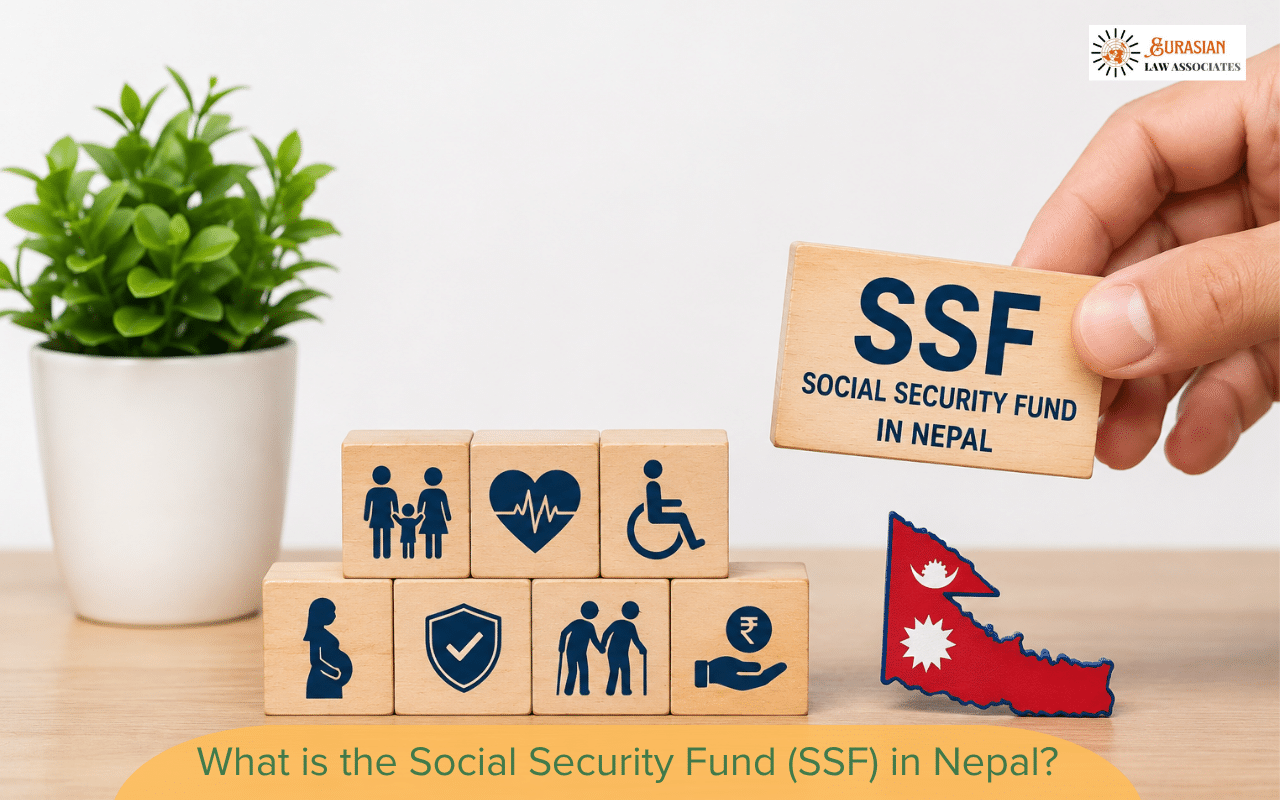
The Social Security Fund Nepal, also known as SSF or सामाजिक सुरक्षा कोष, is Nepal’s national social protection program for formal-sector workers. It collects monthly contributions from both employers and employees. It then uses that money to pay for medical treatment, maternity care, accident coverage, disability support, and retirement benefits.
Think of it this way. You work hard every day. If something goes wrong, you fall sick, get injured at work, or reach retirement, SSF is the system that steps in to support you financially. It is not charity. It is a right you contribute to and earn over time.
Purpose and Legal Framework of Social Security Fund Registration in Nepal
SSF was created under the Contribution Based Social Security Act 2074 (योगदानमा आधारित सामाजिक सुरक्षा ऐन २०४९). This law defines who must register, how much must be contributed, and what benefits employees can receive. It also works together with the Labor Act 2074 (श्रम ऐन २०४९), which makes it part of Nepal’s constitutional framework for workers’ rights under Article 34.
Live contributions to SSF began on 27 November 2018. Since then, the system has grown to cover tens of thousands of employers and hundreds of thousands of workers across Nepal.
Role of the Social Security Fund Board and the Ministry of Labour
The Social Security Fund Board oversees the entire system. It manages the funds, approves benefits, and ensures compliance. The Ministry of Labour, Employment and Social Security (MoLESS) sets the policy framework and updates regulations. Both bodies work together to make sure SSF remains financially strong and legally sound.
Why SSF Matters for Employers and Employees
For employees, SSF registration means real financial protection. For employers, it means legal compliance and the ability to operate without risk of fines, audits, or court action. Skipping SSF registration is not just an oversight. It is a violation of Nepal’s labor law that can lead to serious penalties.
Is Social Security Fund Registration in Nepal Mandatory?
Yes. SSF registration is compulsory in Nepal. This is not optional. Every formal-sector employer must register, and every employee of a registered employer must be enrolled. The transition period for SSF registration has long expired. Registrations are ongoing, and there are no more grace periods.
Labor Act 2074 and SSF Legal Requirements
The Labor Act 2074 integrates SSF into the legal framework of employer obligations in Nepal. Sections 52 to 56 of the Labor Act 2074 require all formal-sector employers to enroll their businesses and workers in SSF. Failing to do so is a violation of the law, not just a policy breach.
What this means practically:
- You cannot legally operate as a registered business in Nepal without completing SSF registration.
- New employees must be enrolled within three months of starting work.
- Employers are personally responsible for ensuring that all workers, including daily wage and contract workers, are properly registered.
Contribution-Based Social Security Act 2074
The Contribution Based Social Security Act 2074 is the primary legislation that governs SSF. Under Sections 7 and 8 of this Act, every private-sector employer in Nepal is legally required to register with the Social Security Fund Nepal. This applies to companies, firms, NGOs, cooperatives, banks, financial institutions, and foreign-owned entities operating in Nepal.
There is no minimum employee number. Even if you have one single employee, you are required to register. Company size does not create an exemption.
Which Businesses and Employers Must Register?
Private Companies
All private companies registered in Nepal must complete SSF registration. This includes IT firms, manufacturing units, retail businesses, hospitality companies, financial institutions, and educational institutions. There is no industry exclusion.
NGOs and INGOs
Non-governmental organizations and international NGOs operating in Nepal and employing local staff must also register for SSF. Many NGOs mistakenly believe they are exempt because of their non-profit status. They are not. If you employ workers in Nepal under a formal employment relationship, SSF registration is required.
Contract-Based and Daily Wage Employment
Even workers hired on a contract basis or as daily wage workers fall under SSF. If there is an employer-employee relationship, the obligation to register exists. This is a common area where businesses receive labor compliance penalties, because they assume temporary or contract employees are outside the SSF framework.
Foreign Nationals Working in Nepal
Foreign nationals working legally in Nepal with a valid work permit must also be registered under SSF Nepal. There is no distinction between Nepali and foreign national participation. The law applies equally. Employers with foreign staff must include them in their SSF enrollment.
Who must register under the Social Security Fund Nepal?
Employers Required to Register
Any organization or individual that employs workers in Nepal’s formal sector is required to complete employer SSF registration in Nepal. This includes:
- Private limited and public limited companies
- Sole proprietorships and partnerships with employees
- NGOs, INGOs, and nonprofit organizations
- Banks, insurance companies, and cooperatives
- Educational institutions, hospitals, and health services
- Foreign companies with operations or representative offices in Nepal
Employees Covered Under SSF
All employees under a formal employment relationship are covered. This includes permanent employees, part-time workers, contract-based employees, and probationary staff. Workers hired through a third-party labor contractor are also covered if the employer-employee relationship is substantive.
SSF for Startups, Small Businesses, and Informal Workers
A common question is: Does SSF apply to startups with only one or two employees? The answer is yes. There is no minimum workforce size in the law. Even a startup with a single employee must register for SSF in Nepal.
Informal workers and self-employed individuals are not automatically required to register. However, they have the option to voluntarily enroll in SSF. This voluntary enrollment option was expanded in recent years to include freelancers, farmers, and daily wage workers who want to access SSF benefits.
What Documents Are Required for SSF Registration in Nepal?
Before starting Social Security Fund registration in Nepal, employers should prepare all required documents in advance. Missing even a single document may delay verification and approval. The checklist below covers the essential employer and employee registration requirements.
SSF Registration Document Checklist
| Category | Required Documents | Purpose |
| Employer Registration Documents | Company Registration Certificate issued by the Office of the Company Registrar | Proof of legal company registration |
| PAN Certificate issued by the Inland Revenue Department | Tax identification and employer verification | |
| VAT Registration Certificate (if applicable) | Verification of VAT-registered businesses | |
| Latest Tax Clearance Certificate | Confirmation of tax compliance | |
| Board Resolution and Authorized Details | Board Resolution authorizing SSF registration | Authorization for filing and registration |
| Name, designation, and contact details of authorized signatory | Verification of the responsible representative | |
| Company bank account details | Contribution and payment verification | |
| Office address proof and contact details | Employer communication and record verification | |
| Employee Registration Documents | Citizenship Certificate or valid Passport (for foreign nationals) | Employee identity verification |
| Full legal name and date of birth | Personal record verification | |
| Job title and date of joining | Employment verification | |
| Bank account number for benefit disbursement | SSF benefit and payment processing | |
| Contact phone number and email address | Communication and account verification | |
| Previous SSFID (if transferring employer) | Continuity of SSF contribution history |
Important: Preparing these documents before using the SOSYS portal can significantly reduce registration delays. Incomplete uploads, missing information (जानकारी), and documentation errors are among the most common causes of delayed SSF approval and employer verification.
Complete SSF Registration Checklist
| Employer Documents | Employee Documents |
| Company Registration Certificate | Citizenship Certificate or Passport |
| PAN/VAT Certificate | Full Name and Date of Birth |
| Board Resolution (Authorizing Registration) | Job Title and Employment Start Date |
| Authorized Signatory Details | Bank Account Details (for Benefit Payment) |
| List of All Employees with Details | Contact Number and Email Address |
| Company Bank Account Details | Previous SSFID (If Transferring Employer) |
Important: Having all these documents ready before starting the online SSF registration process can save significant time. Upload errors, missing information(सूचना), and incomplete submissions are among the most common reasons for delayed SSF registration and verification.
How to Complete Social Security Fund Registration in Nepal?
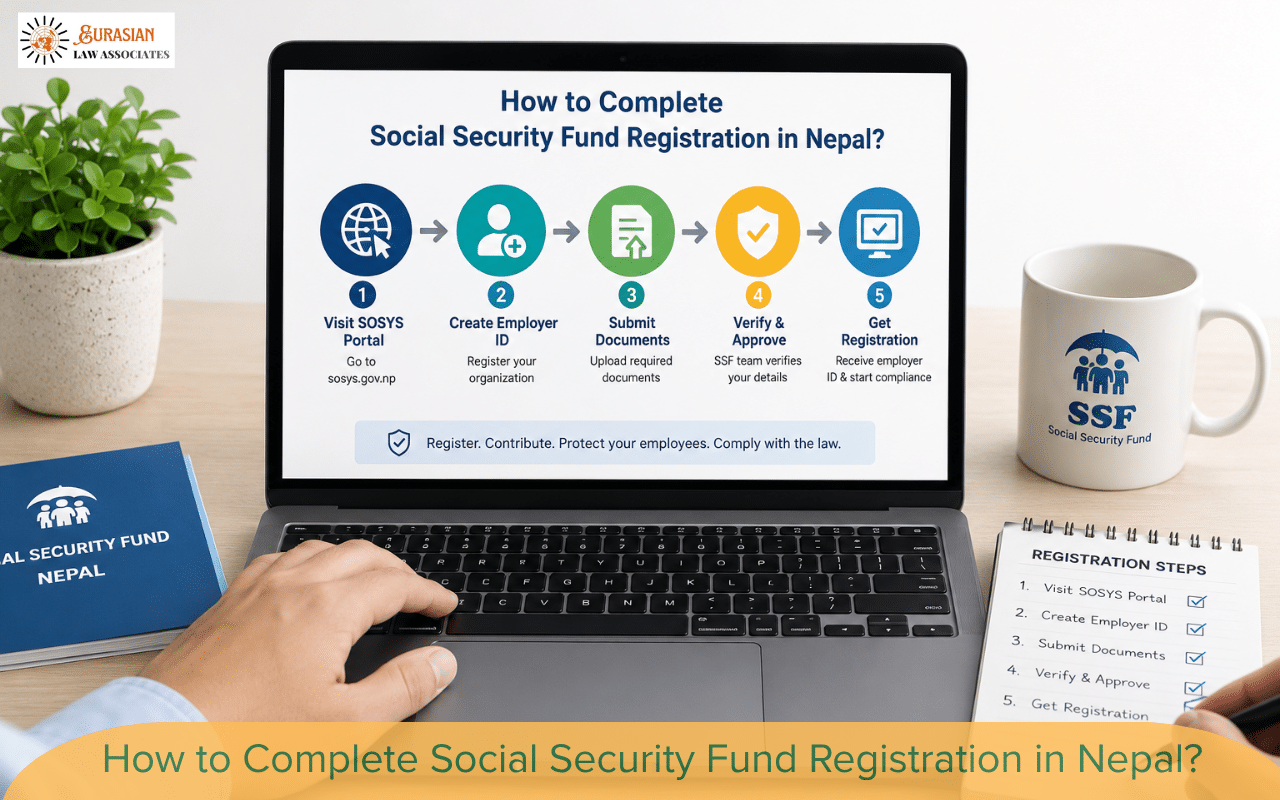
This step-by-step online registration process helps employers complete SSF online enrollment with fewer mistakes. Keeping all documents required ready before starting the SOSYS process saves time and reduces delays.
Social Security Fund registration in Nepal is completed online through the SOSYS portal. SOSYS stands for Social Security System, and it is accessible at sosys.ssf.gov.np. The process has four main stages.
Step 1: Employer Registration Through the SOSYS Portal
- Go to sosys.ssf.gov.np and select the employer registration option.
- Fill in your company’s basic details: name, registration number, PAN, and contact information.
- Create your employer login credentials. Your username and password will be sent to your registered email.
- Your Employer Registration Number (ERN) is generated at this stage. Keep this number safe; you will need it for all future SSF transactions.
Step 2: Document Upload and Verification
- Log in using your newly created employer credentials.
- Upload all required documents: company registration certificate, PAN certificate, board resolution, and authorized signatory details.
- The SSF system verifies your documents. This process typically takes 3 to 7 working days.
- If any document is incomplete or unclear, the system will flag it and request resubmission.
Step 3: Employee Enrollment and SSFID Generation
- Once employer verification is complete, log in and navigate to the employee enrollment section.
- Enter each employee’s details: name, citizenship number or passport, date of birth, job title, and bank account.
- After submission and verification, each employee receives an 11-digit SSFID (Social Security Fund ID). This is their unique identity in the SSF system for life.
- New employees hired after initial registration must be enrolled within three months of their start date.
Under the Nepal labor law, employers are required to keep enrollment records updated. New workers must be registered and required to enroll in SSF within the legal timeline to avoid compliance problems.
Step 4: Monthly Contribution Setup and Ongoing Compliance
After completing Social Security Fund registration in Nepal, employers must maintain monthly contributions and compliance. After enrollment, employers must make monthly contributions. This is where many employers face problems if they are not organized.
Employer Registration Number (ERN)
Your ERN is your permanent identifier in the SSF system. It links all your employees, contributions, and compliance records. Never share your ERN login credentials with unauthorized staff. Any action taken under your ERN is legally your responsibility.
Monthly Returns and E-Payment Process
Every month, employers must:
- Log in to SOSYS and submit the monthly payroll return listing all employees and their basic salaries.
- Calculate the total contribution: 20% employer share plus 11% employee deduction, totaling 31% of each employee’s basic salary.
- Pay the full amount into the SSF account by the 15th of each Nepali month.
- Save the payment confirmation and receipt for your compliance records.
Missing this deadline even once triggers a 10% interest charge on the unpaid amount. Repeated late payments can escalate to formal legal action.
SSF Contribution Rate in Nepal and How the 31% Contribution Works
The total Social Security Fund (SSF) contribution is 31% of an employee’s basic salary each month. This contribution is calculated on the basic salary component only, not on the employee’s total gross salary or overall cost-to-company package.
SSF Contribution Breakdown in Nepal
| Party | Contribution Rate | Contribution Basis |
| Employer | 20% | Employee’s Basic Salary |
| Employee | 11% | Employee’s Basic Salary |
| Total | 31% | Monthly Basic Salary |
Important: The 31% SSF contribution is calculated using the employee’s agreed basic salary, not allowances, bonuses, incentives, or the total gross compensation package. Employers should ensure payroll calculations are accurate to avoid contribution errors and compliance issues.
Employer Contribution (20%)
The employer pays 20% of each employee’s basic salary into the SSF account every month. This is a direct employer cost. It is not deducted from the employee’s salary. This amount is the employer’s own contribution to the worker’s social security protection.
Employee Deduction (11%)
The employee contributes 11% of their basic salary. However, the employer deducts this from the employee’s salary at the time of payment. The employer then deposits both the employer share (20%) and the employee share (11%) together into the SSF account. The employee never has to go to the bank themselves.
Contribution Deadlines and Payment Rules
- Payment must reach the SSF account by the 15th of each Nepali month.
- The maximum taxable salary ceiling for SSF has been raised to NPR 350,000 per month as of fiscal year 2082/83.
- If a contribution is paid late, SSF charges 10% interest on the overdue amount.
- Employers are responsible for depositing both their own and the employee’s share.
Payroll and Contribution Calculation Issues
A common mistake employers make is calculating SSF on the total salary package instead of only the basic salary. This leads to over-contribution or disputes during audits. Make sure your payroll system is configured to apply the 31% SSF contribution only to the basic salary component.
Another frequent issue is failing to update contribution amounts when employees receive salary increases. Every time a basic salary changes, the monthly SSF contribution must be recalculated and updated in the SOSYS portal.
Four SSF Schemes and Benefits in Nepal
Once an employee is registered through SSF Nepal, they are automatically enrolled in four protection schemes. These schemes cover almost every major financial risk a worker can face during their career and after retirement.
Medical, Health and Maternity Protection Scheme
This scheme covers the cost of medical treatment and hospitalization for the employee and their immediate family. It also covers maternity-related medical expenses. Employees bear a 20% co-payment on all medical claims. Claims are processed within 15 working days through the SOSYS portal.
This scheme is especially valuable because healthcare costs in Nepal can be high. Having SSF coverage reduces the financial burden on both workers and their families during medical emergencies.
Accident and Disability Protection Scheme
If an employee suffers an accident at the workplace or becomes permanently disabled, this scheme provides direct financial compensation. It covers partial and total disability. It also covers accidental death, where the family of the deceased worker receives a compensation payment.
Dependent Family Protection Scheme
If a registered SSF contributor dies during their working years, their dependent family members receive financial support from this scheme. This benefit is separate from the accident scheme. It applies even if the employee’s death was not work-related.
Old Age Protection Scheme
This is the retirement scheme. It has three components.
Provident Fund
A portion of every monthly contribution goes into the employee’s provident fund account under SSF. This builds up over the years and is paid out as a lump sum when the employee retires. For employers already enrolled in SSF, standalone provident fund arrangements through EPF are replaced by the SSF old age scheme.
Gratuity
Gratuity is a farewell payment made to employees who complete long periods of service. Under SSF, gratuity accumulation happens through the monthly contribution system rather than being a separate employer liability. Once the employee retires or leaves after meeting the minimum service period, they receive their accumulated gratuity through SSF.
Pension Benefits
Employees who contribute for the required minimum period become eligible for a monthly pension after retirement. This gives workers a regular income in their old age rather than relying entirely on a one-time lump sum. The pension component is one of the strongest advantages of SSF compared to the older provident fund system.
Key Differences Between SSF, CIT, and Provident Fund in Nepal
Many employers and employees ask the same question: how is SSF different from CIT and the old Provident Fund? This is one of the areas where most online guides fall short. Here is a clear breakdown.
Comparison Table: SSF vs CIT vs Provident Fund (PF)
| Factor | SSF | Citizen Investment Trust (CIT) | Provident Fund (PF/EPF) |
| Mandatory? | Yes (formal-sector employers) | No (voluntary) | Replaced/integrated for enrolled employers |
| Who Manages It? | Social Security Fund Board / MoLESS | Citizen Investment Trust | Employees Provident Fund (EPF) |
| Primary Purpose | Social protection and employee security | Savings and investment returns | Retirement savings |
| Medical Coverage | Yes | No | No |
| Accident & Disability Protection | Yes | No | No |
| Pension / Old-Age Benefits | Yes | Investment returns only | Retirement lump sum |
| Maternity Benefits | Yes | No | No |
| Dependent Family Protection | Yes | No | No |
| Can Run Alongside SSF? | N/A | Yes (voluntary alongside SSF) | No (subject to SSF integration rules) |
Short Note: SSF is a mandatory and comprehensive social protection system in Nepal, while CIT functions mainly as a voluntary investment scheme, and the traditional Provident Fund primarily focuses on retirement savings.
Which System Is Better for Employers and Employees?
For employers, SSF is the only legally required option. You cannot choose CIT or PF as a substitute for SSF compliance. CIT remains a voluntary, supplementary option.
For employees, SSF provides broader protection. It covers medical, accident, disability, family protection, and old age pension all in one system. CIT only provides investment returns. The old PF only covered retirement. SSF gives workers more real-world protection throughout their working lives.
Common SSF Compliance Problems and Penalties in Nepal
Employers who delay Social Security Fund registration in Nepal or monthly compliance may face penalties and legal issues. They fail because they do not have proper systems in place, or because they are unaware of exactly what is required month to month. Understanding the common problems helps you avoid them.
Common SSF Compliance Problems
- Incorrect employee information and documentation errors
- Delayed SSF contribution payments
- Payroll and HR coordination problems
- Missing or incomplete employee enrollment
- SOSYS portal upload and verification issues
- Lack of employee awareness about SSF benefits
- Failure to submit monthly returns on time
- Poor record-keeping and compliance monitoring
Penalties for SSF Non-Compliance
- Fines for failure to complete SSF registration
- Interest charges on late SSF contributions
- Employer legal liability for unpaid employee benefits
- Labor disputes and compliance investigations
- Possible bank account freeze and property seizure
- Risk of business license suspension or cancellation
- Increased financial and legal exposure for employers
Practical Compliance Tips for Businesses
- Assign one dedicated HR staff member to manage SSF submissions and payments every month.
- Set a reminder five days before the 15th deadline for every Nepali month.
- Keep digital copies of all payment receipts and SOSYS submission confirmations.
- Enroll new employees within one month of joining; do not wait for the three-month deadline.
- Reconcile your SSF records with your payroll records at least once per quarter.
- Consult a qualified labor law advisor if you are unsure about any aspect of your compliance status.
For businesses that need structured legal guidance on SSF compliance, Eurasian Law Associates provides dedicated labor law consultation in Nepal, covering employer registration, employee enrollment, and ongoing compliance support.
When to Seek Legal Guidance for SSF Registration and Compliance
If your business has never registered for SSF, if you have gaps in contribution history, if employees have disputed or missing SSFIDs, or if you have received a notice from the Ministry of Labour, Employment and Social Security, it is important to seek qualified legal advice immediately.
Eurasian Law Associates provides structured labor law consultation services in Nepal. Our team supports employers through SSF registration, employee enrollment, contribution compliance, and labor dispute resolution. Reaching out early before a government notice or audit is always the better choice.
Staying SSF compliant protects your workers, protects your business, and demonstrates that your organization operates with integrity under Nepal labor law.
Conclusion
Social Security Fund registration in Nepal is not just paperwork. Completing Social Security Fund registration in Nepal on time helps employers stay compliant and protect employees. It is a legal duty and an important part of protecting workers and managing business risk. Under the Contribution-Based Social Security Act 2074 and Labor Act 2074, employers must register, enroll eligible workers, and maintain regular SSF contributions.
The good news is that SSF registration in Nepal is straightforward when you are prepared. Keep your documents ready, use the SOSYS portal correctly, and pay the 31% SSF contribution on time. This helps businesses avoid fines, disputes, and legal problems while giving employees long-term protection.
If your business faces registration delays, missing SSFIDs, or compliance concerns, early legal guidance can help avoid bigger issues later. Eurasian Law Associates, based in Kathmandu, supports employers with SSF registration, employee enrollment, and labor law compliance across Nepal.
Eurasian Law Associate
Call: 9713592500
Email: eurasianlawassociates@gmail.com | info@laweurasian.com
Location: Kathmandu-32, Koteshwor, Kathmandu, Nepal
Frequently Asked Questions (FAQs)
Q: Is SSF registration mandatory for private companies in Nepal?
A: Yes. SSF registration is mandatory for all private companies in Nepal under the Contribution-Based Social Security Act 2074 and the Labor Act 2074. Even a company with only one employee must complete SSF registration in Nepal.
Q: What documents are required for Social Security Fund registration in Nepal?
A: Employers need a company registration certificate, PAN or VAT certificate, board resolution, and authorized signatory details. Employees need citizenship or passport details, job information, bank account details, and contact information for SSF registration.
Q: How long does Social Security Fund registration in Nepal take?
A: SSF registration in Nepal usually takes about 3 to 7 working days for employer verification through the SOSYS portal. Missing or incorrect documents may delay the process.
Q: How do employers register through SOSYS?
While employers can complete SSF registration through the SOSYS portal, legal and documentation issues may still arise. Eurasian Law Associates provides guidance on SSF registration, employer compliance, and labor law matters in Nepal. Visit for assistance.
Q: What is an SSFID?
A: An SSFID is an 11-digit Social Security Fund number given to every registered employee. It stays with the employee for life and helps track SSF contributions and benefits.
Q: Can employers opt out of SSF?
A: No. Employers cannot opt out of SSF because SSF registration is mandatory under the Nepal labor law. Only certain government service groups already covered by pension systems are exempt.
Q: Is SSF compulsory for startups and NGOs?
A: Yes. SSF is compulsory for startups, NGOs, and INGOs working in Nepal if they employ staff. Business size or non-profit status does not create an exemption from SSF registration.
Q: Can foreign employees register in Social Security Fund Registration in Nepal?
A: Yes. Foreign nationals working legally in Nepal with a valid work permit must join SSF Nepal. Employers must include foreign employees in SSF enrollment using passport details.
Q: What are the penalties for SSF non-compliance?
A: Employers who fail to complete SSF registration or delay contributions may face fines, interest, legal action, and business penalties. They may also become responsible for paying employee benefits themselves.
Q: What is the difference between SSF, CIT, and Provident Fund in Nepal?
A: SSF is mandatory and provides medical, accident, maternity, family, and pension protection. CIT is voluntary for savings and investment, while the Provident Fund (EPF) mainly focuses on retirement savings and cannot replace compulsory SSF registration.
Q: Who can help employers with SSF registration and compliance in Nepal?
A: Employers can complete SSF registration in Nepal through the SOSYS portal, but paperwork, payroll, and compliance issues may sometimes need professional guidance. Eurasian Law Associates assists employers with SSF registration, labor law compliance, and Social Security Fund matters in Nepal when support is required.